








Feedback Loops: What Makes AI Coding Agents Actually Useful

Anke Corbin
8 min read
In the last couple of posts, we talked about planning and documentation as foundations of reliable AI-assisted development.
8 min read
In the last couple of posts, we talked about planning and documentation as foundations of reliable AI-assisted development.
8 min read
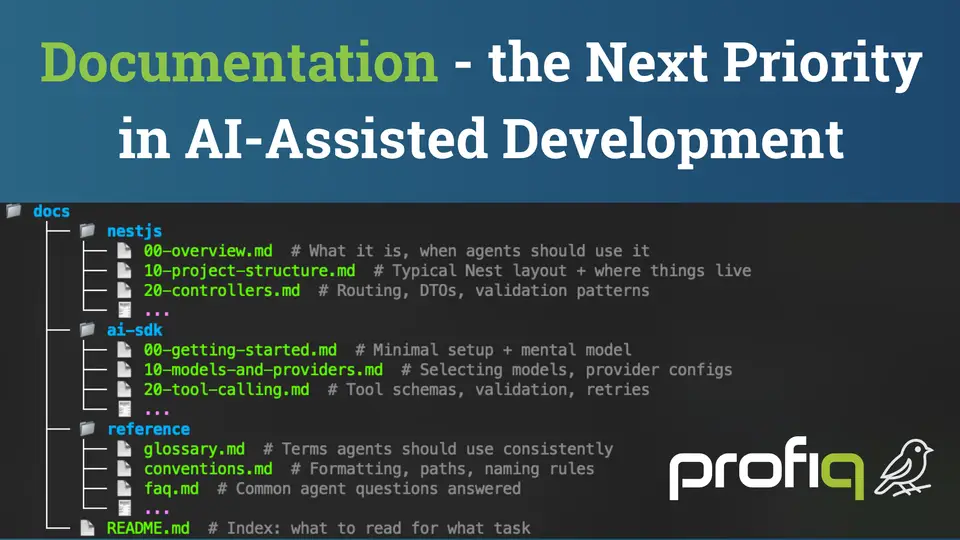
A priority is 'Documentation', as a practical way to make coding agents more accurate, more consistent, and far less likely to drift into outdated assumptions. This post explains why documentation matters so much for AI coding workflows, what tends to go wrong with “just search the web” approaches, and why Weaver treats documentation as a first-class citizen inside the repository.
10 min read
Why a key AI development capability is workflow planning: the ability for an agent to take a problem, ask the right questions, propose implementation steps, and only then move into execution.
6 min read
We’ve been building in public — documenting our thinking, sharing what we’ve learned, and inviting the community into a conversation about the future of AI-augmented software development.

8 min read
Project Weaver is answering the question: What does it take for an AI system to operate as a genuine engineering partner- not a code autocomplete, but a collaborator that can meaningfully participate in the creation of real backend applications?
10 min read
When we started Project Weaver at profiq, we set ourselves a goal that would have sounded unrealistic just a few years ago: Build an AI-powered “engineer” that can help us design and implement serious, production-ready backend applications.
6 min read
When we started Project Weaver, we weren’t trying to build another AI coding assistant.
5 min read
At profiq, we've always believed that the best engineering work grows from curiosity, collaboration, and honest reflection. That is why we've decided to build in public.
5 min read
When we decided to build our own AI-powered development stack, one question came up immediately: Who should lead it?We needed someone who not only understood the technology, but also felt its impact, someone who had experienced, firsthand, how AI is reshaping what it means to build software.For us, that person was Viktor Nawrath. Seeing the Future, One Prompt at a Time
5 min read
Over the past year, AI-powered development has shifted from curiosity to inevitability.
Try another category, tag, or search term.